
The breach that ends up in a headline is rarely the work of a genius. In 2025, stolen credentials were the most common way attackers got into an organization, and for healthcare web application attacks specifically, roughly 88% involved a stolen login. No zero-day, no nation-state toolkit. Someone had a password they should not have had. Data security in healthcare fails, overwhelmingly, on the ordinary.
That is the uncomfortable pattern behind the numbers. Healthcare remains the costliest industry for breaches, averaging $7.42 million per incident and 279 days to identify and contain, according to IBM’s Cost of a Data Breach research. Providers keep investing in advanced tools while the actual entry points stay mundane: reused passwords, unpatched servers, a cloud storage bucket left open, a business associate with weak controls. The gap is not sophistication. It is attention, and outside IT consulting exists largely to supply the attention an internal team has quietly run out of.
What Actually Breaks Data Security in Healthcare
Look at how breaches begin and the exotic explanations fall away. The 2025 Verizon Data Breach Investigations Report put stolen credentials at 22% of all breaches, with exploited vulnerabilities close behind at 20%. Phishing sits among the top vectors year after year because it works, and it works because it targets people rather than firewalls.
Configuration is the other quiet failure. One 2025 incident recorded on the federal breach portal exposed the data of roughly 4.7 million people through a web-analytics setting that had been misconfigured and left running for nearly three years. Nobody attacked it. It leaked steadily because no one revisited a decision made long ago. Network servers holding electronic protected health information account for the majority of exposed records, which points less at clever intrusion and more at systems that were reachable when they should not have been.
Also Read: Android in the Age of AI: How ML Is Rewriting the Mobile Experience
Group the real root causes and a short, unglamorous list emerges:
- Credential problems: shared logins, weak or reused passwords, and missing multi-factor authentication.
- Configuration drift: storage, analytics, and access settings that were correct once and never rechecked.
- Unpatched systems: known vulnerabilities left open because patching disrupts clinical operations.
- Excess access: staff and vendors holding permissions they no longer need.
None of these require an advanced adversary. They require someone to notice them before an attacker does.
Credentials deserve particular attention because they undo other investments. A hospital can buy strong perimeter defenses and still lose data when an attacker simply logs in with a valid password bought from an infostealer market. The Verizon analysis found that a large share of compromised systems with corporate logins were unmanaged personal devices, the phones and laptops that carry both a clinician’s Netflix password and their access to the patient record. Multi-factor authentication blunts most of that, yet it remains inconsistently applied across the sprawl of systems a modern provider runs.
The Devices and Vendors No One Is Watching
Two categories rarely appear on an internal security team’s daily radar, and both hold patient data. The first is connected medical equipment: infusion pumps, imaging systems, monitors, and the growing field of remote monitoring devices. Many run old operating systems that cannot be patched without vendor sign-off, and many sit on the same network as the electronic health record. An attacker who reaches one poorly isolated device can often move toward records that matter.
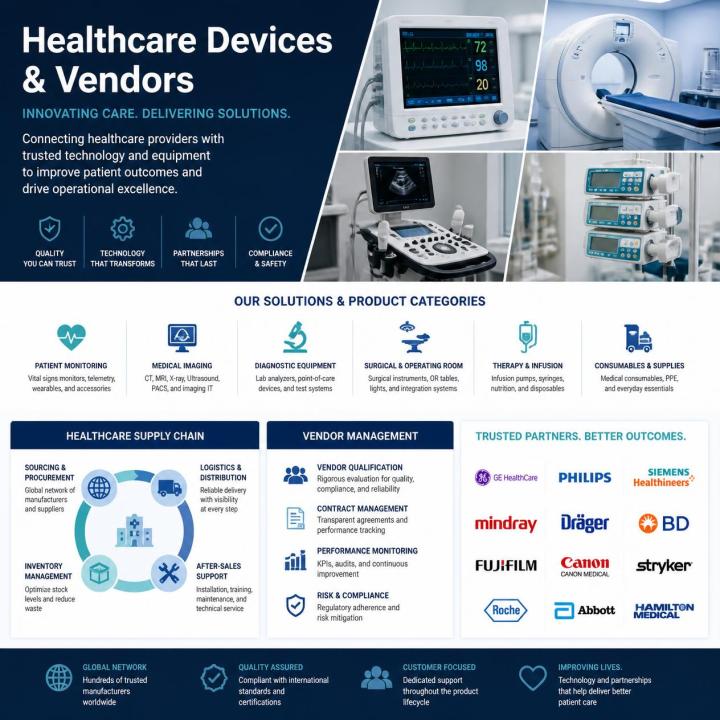
The second is the business associate. Vendors caused several of the largest healthcare breaches of 2025, and a single processor serving many providers becomes a shared point of failure for all of them. When that vendor is compromised, every provider that shared data inherits the notification duty and the scrutiny. An internal team busy with clinical systems seldom has the time to verify how a billing vendor stores data or whether it quietly added an AI feature that changed the risk. An outside assessment treats these devices and vendors as part of the attack surface rather than someone else’s problem.
Why Internal Teams Stop Seeing Their Own Gaps
Skilled internal teams miss these problems for a reason that has nothing to do with competence. They are close to the environment. A setting that was reasonable three years ago blends into the background. An account that should have been disabled after a contractor left keeps working, so no one questions it. Alert fatigue does the rest: when a monitoring tool cries wolf a hundred times a week, the hundred-and-first warning gets muted.
Familiarity is the enemy of data security in healthcare. The same people who built a system are the least able to see where it has drifted, because they remember why each choice was made and trust that the reasoning still holds. Clinical priorities compound the effect. When a hospital IT team is keeping the electronic health record online during a busy shift, revisiting a two-year-old firewall rule does not make the day’s list. The gap is not created by neglect. It accumulates through the ordinary business of keeping systems running.
Consider a common scenario. A clinic opens a temporary remote-access path so a specialist can review images from home during a staffing crunch. The crunch passes, the specialist moves on, and the path stays open because closing it was never anyone’s assigned task. Two years later it is still there, forgotten by the people who created it and invisible in the daily noise of alerts. An outsider reviewing access rules for the first time spots it in an afternoon, precisely because they carry none of the history that made it seem normal.
How Healthcare IT Consulting Minimizes Cyber Risks
An outside team brings the one thing an internal team cannot manufacture: unfamiliarity. Healthcare IT consulting services approach the environment the way an attacker would, without assuming any past decision was correct. That perspective, applied methodically, is what turns a vague sense of risk into a ranked list of fixable problems.
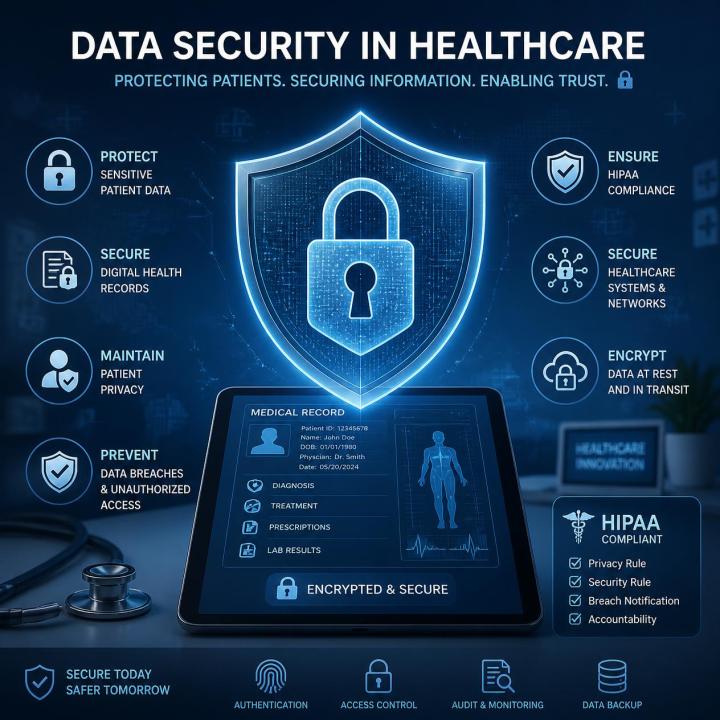
A credible engagement usually moves through a clear sequence:
- Map the real environment: inventory every system, cloud service, and vendor that touches patient data, including the tools clinical teams adopted without telling IT.
- Audit access: find dormant accounts, over-privileged users, shared credentials, and any system still missing multi-factor authentication.
- Harden configurations: review storage, analytics, and network settings against current benchmarks rather than the assumptions in place when they were built.
- Test the defenses: run controlled phishing simulations and penetration tests to see what a real attacker would reach.
- Prioritize and remediate: rank findings by exposure and business impact, then fix the ones that matter most first.
The value is in the ranking as much as the finding. A list of 300 vulnerabilities helps no one; a list of the six that would actually let an intruder reach patient records changes what the team does on Monday. Good healthcare IT solutions pair this assessment with the tooling to sustain it, so that access reviews and configuration checks keep running after the consultants leave.
People sit at the center of this work, not off to the side. Because phishing and stolen credentials drive so many incidents, the training that teaches staff to recognize a fraudulent login prompt does more for data security than most technical purchases. A consulting team measures that human layer directly, running simulations and reporting click rates over time, so leadership can see whether awareness is actually improving rather than assuming it. The aim is not to blame clinicians for clicking. It is to design systems and habits that make a single mistake survivable.
Turning a One-Time Assessment Into Ongoing Protection
A single assessment ages quickly. New systems arrive, staff change roles, and vendors update their software, so a clean report in January describes an environment that no longer exists by summer. The providers who genuinely reduce risk treat assessment as a rhythm, not an event.
That rhythm looks practical rather than heroic. Access reviews run on a schedule and revoke what is no longer needed. Configuration baselines are monitored, so drift raises a flag instead of a breach. Phishing simulations repeat, because the workforce turns over and last year’s training fades. Detection and response are rehearsed before an incident, not improvised during one, which is what shrinks that 279-day containment window into something survivable. Managed monitoring closes the loop, watching for the credential misuse and configuration changes that precede most breaches.
The economics favor this steadiness. Containment time is a direct cost driver in the IBM data, so an attack caught in days rather than months is measured in millions of dollars of avoided loss, not to mention the patients spared a breach notice. Continuous monitoring also changes the internal team’s role. Freed from chasing every alert, they focus on the fixes that a consulting partner has already ranked, which is a better use of scarce clinical-IT hours than triaging noise. The point of an outside partner is not to replace the internal team. It is to give that team a clear, prioritized view of where the real risk sits and the capacity to act on it.
Compliance Follows From Security, Not the Reverse
Many providers approach this backward, chasing a HIPAA checkmark and hoping security follows. It works better the other way. When access is controlled, systems are patched, and data flows are mapped, regulatory compliance largely takes care of itself, because the safeguards regulators ask about are already in place and evidenced. A consulting partner that understands both the technical and regulatory sides can align the two, so the same monitoring that stops an intruder also produces the audit trail an investigator will later request. Security done well makes compliance a byproduct rather than a separate scramble.
Conclusion
Data security in healthcare will keep being tested by the same ordinary weaknesses, not by the dramatic ones, because those are the openings that stay open. The organizations that pull ahead are the ones willing to let an outside team question what internal familiarity has stopped questioning. Damco’s healthcare IT consulting services help providers find the stolen-credential paths, configuration drift, and excess access that cause most incidents, then build the ongoing discipline that keeps them closed. Start by assuming the next breach will come from something mundane, and go looking for it. A healthcare IT consultant engagement that finds the boring gaps first is worth more than any tool bought to stop an attack that was never coming.

